

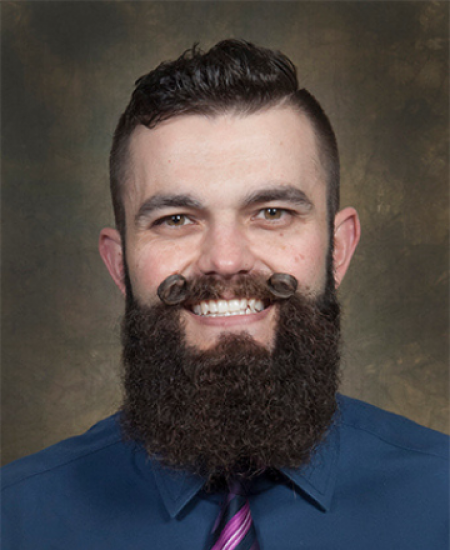
By Steven Daveluy, MD, Professor of Dermatology, Wayne State University
More than 80 percent of patients with hidradenitis suppurativa first present to a clinician who is not a dermatologist. Primary care. OB/GYN. Urgent care. The emergency department. That is where care begins, and where the seven-to-ten-year delay to diagnosis begins with it.
I have spent much of my career at this junction. I run a clinic in Detroit that sees a broad cross-section of patients with HS, I served on the board of the HS Foundation for 6 years, and for more than a decade I have taught primary care, family medicine, OB/GYN, and other non-dermatology specialties about skin disease. From that vantage point, the frontline encounter is where HS care most often goes wrong first. If the field is going to close the diagnostic gap, that is where the work has to happen.
The pattern I see repeated most often at the frontline is a version of the same encounter. A patient walks into an urgent care or primary care office with a single painful lesion. The clinician sees an abscess, drains it, prescribes an antibiotic, and sends the patient home. The lesion improves. Six months later the patient comes back with another one. Then again. If the pattern is caught, the patient is eventually referred to dermatology. If it is not caught, they cycle through the system for years.
The gap in that pattern is not treatment. It is history. When a patient presents with what looks like a recurring skin infection, the question that would identify HS in most cases is a single line: has this happened before, and where? Research suggests that asking whether a patient has had more than one boil in the armpit, groin, under the breast, or in the buttocks over the last six months identifies HS with roughly 90 to 98 percent probability. My own view is that we can simplify further. Anyone who has had more than one boil in their life should be seen by a dermatologist. If it is not HS, we can identify what it is. If it is HS, we can start the work of managing it decades earlier than we do today.
Even once the pattern is identified, patients should not spend the months it takes to see a dermatologist doing nothing. Primary care and other non-dermatology clinicians have a set of medications in their existing wheelhouse that can help HS. Antibiotics. Spironolactone. Metformin. Finasteride. These are drugs a primary care physician is already comfortable prescribing. They already understand the side effect profiles. They already know how to talk to patients about them. There is no reason a patient with an HS diagnosis should sit for three months without treatment when their primary care physician is capable of starting a first-line therapy while they wait.
The upcoming guidelines will make it easier to identify which of those therapies are supported by evidence for which patients. That is one of the practical things guidelines do that education alone cannot. They give a non-specialist clinician a defensible reference to point to when they start a therapy: this is recommended, here is the evidence, I am not improvising.
The care picture broadens once a patient reaches dermatology, but it can still fragment.
Medications, including biologics, can control inflammation and prevent new lesions from forming. They do not typically resolve the draining tunnels that develop in later-stage disease. Those need surgery. In clinic, I see a lot of patients whose medications are doing what they should but who continue to suffer because the tunnels have not been addressed. The dermatologist has to be the quarterback in these situations, keeping biologics running through surgical intervention and coordinating with a surgeon who understands why that matters.
The other gap I see, and one that has been under-addressed in dermatology practice, is around mental health and the patient voice. HS is a stressful disease. Dermatologists often do not ask about the mental health impact, and patients often do not know they can raise it. One practice I would encourage in every dermatology clinic seeing HS patients is some version of a single question: what will you do when your HS is under control that you cannot do now? It sets a goal. It surfaces what the patient is actually trying to get back to. It changes the conversation.
The upcoming joint AAD and HSF guidelines are not an algorithm. They are closer to a menu of what the evidence supports across HS care, and part of the work still ahead is helping clinicians navigate the menu. For non-dermatologists, the guidelines will provide a defensible reference for early recognition and initial management. For dermatologists, they will surface therapies and combinations we may not have reached for before. For payers, they will document evidence for a broader set of interventions than the FDA-approved biologics alone.
That last piece is worth pausing on. There are therapies with strong evidence in HS that are not adequately covered because they read to a payer as cosmetic. Laser hair removal is the clearest example. A course of laser hair removal for an HS patient costs roughly $4,800. A year of biologic therapy costs approximately $40,000. If the laser treatment prevents the need for a biologic, the savings compound over the life of the patient. The guidelines will make that evidence explicit.
These will also be the first joint AAD guidelines with a live-update process, allowing recommendations to be amended as new evidence and new therapies emerge. Given how fast the therapeutic landscape has moved, that infrastructure matters.
The guidelines will land, and they will change what we can defensibly do. But no guideline document, on its own, gets the recognition question into every clinician's practice, or the mental health conversation into every dermatology visit, or the evidence in front of every payer covering HS therapies. That part is on us. Until it happens, the seven-to-ten-year delay isn't a statistic. It's every patient sitting in an urgent care exam room right now, waiting for someone to ask one more question.
For questions or comments please contact us here.
More detailed clinical perspective will follow in subsequent pieces in this series.
Found this helpful? Share it with your network — better-informed clinicians mean better outcomes for HS patients.